Author: uptechbackend

  • Why PHP Websites Are a Great Choice for Affordable and Simple Web Development

    Why PHP Websites Are a Great Choice for Affordable and Simple Web Development

    Not every website needs a complex technology stack. For many businesses, organizations, and individuals, the most important requirements are simple: a website should be reliable, affordable, easy to maintain, and capable of doing the job efficiently.

    This is where PHP remains a practical choice. PHP has been powering websites for decades and continues to be widely used for business websites, blogs, portals, and custom web applications.

    1. Cost-Effective Development

    One of the biggest advantages of PHP is its affordability. PHP is an open-source technology, so there are no expensive licensing fees required to build a PHP website.

    There are also many affordable hosting providers that support PHP, making the overall cost of running a PHP website relatively low.

    For small businesses and startups working with a limited budget, this can make PHP an excellent option.

    2. Easier to Develop

    PHP is relatively straightforward to develop compared with more complex modern application architectures.

    For websites with standard requirements such as:

    • Business pages
    • Contact forms
    • Blogs
    • Service pages
    • Portfolios
    • Admin panels
    • Customer inquiry systems

    PHP can provide everything needed without introducing unnecessary complexity.

    3. Affordable Hosting

    PHP websites can run on many affordable hosting environments, including traditional shared hosting and cPanel-based servers.

    You often don’t need a separate application server or complex deployment infrastructure. This can significantly reduce hosting and maintenance costs.

    4. Easy Maintenance

    A simple PHP website can be easier to maintain because the application architecture can remain relatively straightforward.

    Developers can update content, modify functionality, fix bugs, and add features without managing a complicated frontend-backend architecture.

    For businesses that don’t have a dedicated technical team, simplicity can be a major advantage.

    5. Huge Ecosystem

    PHP has a large ecosystem of frameworks, libraries, CMS platforms, plugins, and development tools.

    Popular platforms such as WordPress are built with PHP, while frameworks such as Laravel provide powerful tools for building custom web applications.

    This means businesses can choose between a ready-made CMS and a fully customized application depending on their requirements.

    6. Excellent for Small and Medium-Sized Websites

    A PHP website is often more than enough for websites such as:

    • Company websites
    • Portfolio websites
    • Restaurant websites
    • Construction websites
    • Agency websites
    • School websites
    • Local business websites
    • Blogs
    • Landing pages

    For these types of projects, using a complex architecture may provide little practical benefit compared with a well-built PHP application.

    7. Faster Development Means Lower Cost

    Because PHP has mature tools, frameworks, CMS platforms, and hosting support, developers can often build websites quickly.

    Less development time can mean a lower project cost for the client.

    For example, a simple business website may not need a separate frontend application, API layer, and dedicated backend infrastructure. A traditional PHP application can handle everything in one system.

    8. Easy Deployment

    PHP applications are supported by a large number of hosting environments.

    Deployment can be as simple as uploading the application files, configuring the database, and setting the required environment variables.

    This makes PHP particularly convenient for clients who already use shared hosting or cPanel.

    9. Reliable and Mature Technology

    PHP has been used in web development for many years and has a mature ecosystem.

    Its long history means there are plenty of developers, documentation, libraries, hosting providers, and solutions available when problems occur.

    Businesses don’t have to depend on a new or experimental technology to build a reliable website.

    10. Not Every Website Needs Headless or Modern JavaScript

    Technologies such as Next.js and headless WordPress are excellent for projects that require advanced performance, highly interactive interfaces, or complex architectures.

    However, they can also introduce additional development and infrastructure requirements.

    For a simple website, a traditional PHP application may be the more sensible choice.

    The best technology isn’t always the most advanced technology. It is the technology that matches the project’s actual requirements.

    PHP vs. Modern Headless Architecture

    RequirementTraditional PHPHeadless + Next.js
    Development costLowerHigher
    Hosting costUsually lowerCan be higher
    DeploymentSimpleMore complex
    MaintenanceEasier for simple sitesRequires more technical knowledge
    Development speedFast for standard websitesMore setup required
    Custom frontendGoodExcellent
    Complex applicationsGood with frameworksExcellent
    Simple business websiteExcellent choiceOften unnecessary
    Large-scale applicationsPossibleExcellent choice

    Conclusion

    PHP remains a strong choice for businesses that want a simple, affordable, reliable, and easy-to-maintain website.

    While modern technologies such as Next.js and headless WordPress provide significant advantages for complex projects, they are not necessary for every website.

    For a small business, portfolio, blog, or informational website, a well-developed PHP application can deliver everything the client needs while keeping development, hosting, and maintenance costs under control.

    Choose technology based on your requirements—not simply because it is newer.
  • Why Headless WordPress Is a Smart Choice for Modern Websites

    Why Headless WordPress Is a Smart Choice for Modern Websites

    The way people experience websites has changed significantly. Today, users expect websites to be fast, responsive, secure, and visually engaging across desktops, smartphones, tablets, and other digital platforms.

    Traditional WordPress websites are still an excellent choice for many businesses, but Headless WordPress has become an increasingly attractive solution for modern websites that require greater flexibility and performance.

    What Is Headless WordPress?

    In a traditional WordPress website, WordPress manages both the content and the website’s frontend.

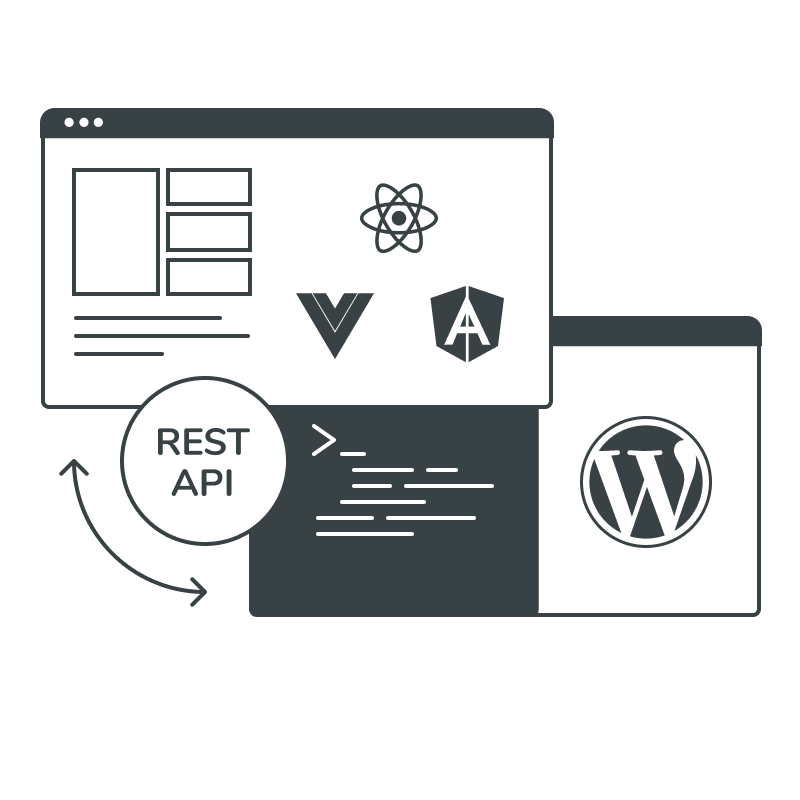
    With a headless setup, WordPress is used primarily as a content management system (CMS), while the frontend is built separately using modern technologies such as Next.js, React, Vue, or other frameworks.

    WordPress manages the content, while the frontend application retrieves that content through APIs such as the WordPress REST API or GraphQL.

    This separation gives developers much greater control over how content is presented to users.

    1. Faster Website Performance

    Website speed is extremely important in the current digital environment. Users expect pages to load quickly, and slow websites can negatively affect both user experience and conversions.

    Headless WordPress allows developers to use modern frontend technologies such as Next.js to optimize rendering, caching, image delivery, and page loading.

    With techniques such as static generation, server-side rendering, and intelligent caching, websites can achieve excellent performance.

    2. Better User Experience

    A headless architecture provides developers with complete control over the frontend.

    Instead of being restricted by a WordPress theme, developers can create custom interfaces and interactions specifically for the project.

    This makes it easier to build modern experiences with smooth animations, interactive components, dynamic content, and highly customized layouts.

    3. Modern Technology Stack

    One of the biggest advantages of headless WordPress is that developers are not limited to WordPress’s traditional frontend architecture.

    For example, a company can use:

    • WordPress for content management
    • Next.js for the frontend
    • React for interactive components
    • REST API or GraphQL for communication
    • CDN and cloud services for performance and scalability

    This allows businesses to combine WordPress’s powerful CMS capabilities with modern web development technologies.

    4. Flexible Content Management

    Content editors can continue using the familiar WordPress dashboard to create and manage pages, blogs, portfolios, products, and other content.

    At the same time, developers have complete freedom over how that content is displayed on the frontend.

    This creates a useful separation between content management and presentation.

    5. Improved Scalability

    Modern websites often need to handle traffic spikes, marketing campaigns, large content libraries, and growing numbers of users.

    A headless architecture can make it easier to scale the frontend independently from the CMS.

    For example, the frontend can be deployed through platforms and infrastructure designed for high performance while WordPress continues to operate as the content management backend.

    6. Multiple Platforms From One CMS

    Headless WordPress is not limited to websites.

    The same WordPress content can potentially be delivered to multiple platforms through APIs, including:

    • Websites
    • Mobile applications
    • Digital displays
    • Web applications
    • Other digital experiences

    This makes headless WordPress particularly useful for organizations that want to manage content centrally while distributing it across multiple channels.

    7. Strong Developer Flexibility

    Developers have significantly more freedom when building a headless website.

    They can select the frontend framework, component architecture, hosting environment, APIs, database integrations, and other technologies based on the project’s requirements.

    This is especially useful for websites that need functionality beyond what traditional WordPress themes and plugins can easily provide.

    8. Better Security Separation

    A headless architecture can reduce the direct exposure of WordPress to website visitors because the public-facing frontend and WordPress backend can operate separately.

    However, headless WordPress does not automatically make a website secure. Proper authentication, API protection, WordPress updates, server security, and access controls are still essential.

    9. Excellent for Modern Business Websites

    Headless WordPress can be particularly valuable for:

    • Corporate websites
    • Large portfolio websites
    • News and publishing platforms
    • High-traffic websites
    • SaaS marketing websites
    • E-commerce platforms
    • Agencies
    • Websites requiring highly customized frontend experiences

    For a simple brochure website, traditional WordPress may still be the better and more cost-effective solution.

    10. The Future of Flexible Web Development

    Modern web development is increasingly moving toward architectures where the CMS, frontend, APIs, and infrastructure can work independently.

    Headless WordPress fits well into this approach because it combines the simplicity of WordPress content management with the flexibility of modern frontend frameworks.

    Conclusion

    Headless WordPress is not simply a newer version of WordPress—it is a different approach to building websites.

    For businesses that need high performance, modern user experiences, flexible frontend development, and the familiar WordPress content management system, headless WordPress can be a powerful solution.

    However, it also requires more development knowledge and maintenance than a traditional WordPress website. The right choice ultimately depends on the project’s goals, budget, complexity, and expected growth.

    For the current web development landscape, WordPress + Next.js is an especially powerful combination, bringing together an easy-to-use CMS with a modern, performance-focused frontend.

  • Why WordPress Is the Best Choice for a Portfolio Website

    Why WordPress Is the Best Choice for a Portfolio Website

    A strong online portfolio is more than just a collection of projects—it is your digital identity. Whether you are a designer, developer, photographer, freelancer, architect, or creative professional, having a professional portfolio website helps you showcase your skills and build trust with potential clients and employers. WordPress is one of the best platforms for creating a modern, flexible, and professional portfolio website.

    1. Easy to Create and Manage

    One of the biggest advantages of WordPress is its user-friendly content management system. You do not need advanced coding knowledge to create pages, upload projects, add images, publish blogs, or update your portfolio.

    You can easily keep your website updated as you complete new projects or gain new skills.

    2. Professional and Modern Designs

    WordPress offers thousands of themes and design options specifically created for portfolios. You can choose a design that matches your profession, personality, and brand.

    With page builders such as Elementor, you can also customize layouts, colors, typography, animations, galleries, and other sections without having to build everything from scratch.

    3. Showcase Your Work Effectively

    A portfolio website should make your work the center of attention. WordPress makes it easy to create project galleries, case studies, image portfolios, video sections, testimonials, and dedicated project pages.

    You can organize your work into categories so visitors can quickly find the projects they are interested in.

    4. SEO-Friendly

    A portfolio is only useful when people can find it. WordPress provides a strong foundation for search engine optimization (SEO), allowing you to optimize page titles, descriptions, URLs, images, content, and other important SEO elements.

    With the right SEO strategy, your portfolio can appear in search results when potential clients search for your services.

    5. Mobile-Friendly

    Most people browse websites using smartphones and tablets. A professional portfolio therefore needs to look great on every screen size.

    Modern WordPress themes and page builders allow you to create responsive websites that adapt to desktops, tablets, and mobile devices.

    6. Easy to Add a Blog

    Adding a blog to your portfolio can help you demonstrate your knowledge and experience. You can write about your projects, industry trends, tutorials, achievements, or professional experiences.

    Regularly publishing useful content can also improve your website’s visibility and help establish you as an expert in your field.

    7. Integrate Your Social Media

    WordPress can easily connect your portfolio with platforms such as Instagram, Facebook, LinkedIn, YouTube, and other social networks.

    This allows visitors to discover more of your work and helps you build a consistent professional presence across different platforms.

    8. Scalable for the Future

    Your portfolio may start with only a few projects, but your career will continue to grow. WordPress makes it easy to expand your website over time.

    You can add new projects, services, testimonials, blogs, contact forms, online stores, booking systems, and other features whenever your needs change.

    9. Cost-Effective

    Compared with building a completely custom website from the ground up, WordPress can be a more affordable option for portfolio websites. You can start with a professional theme and customize it according to your requirements.

    This makes WordPress suitable for freelancers, students, professionals, agencies, and small businesses.

    10. Helps Build Your Personal Brand

    Your portfolio is an opportunity to show people who you are and what you can do. With WordPress, you can create a unique website that reflects your personal brand.

    From your logo and color scheme to your project presentation and written content, every part of the website can be customized to create a consistent professional image.

    Conclusion

    A portfolio website should be professional, easy to manage, visually appealing, and flexible enough to grow with your career. WordPress provides all of these advantages in one platform.

    Whether you are creating your first portfolio or upgrading an existing website, WordPress gives you the tools to showcase your work, attract potential clients, improve your online presence, and build a strong personal brand.

    If you want a portfolio website that looks professional today and can grow with you tomorrow, WordPress is an excellent choice.